
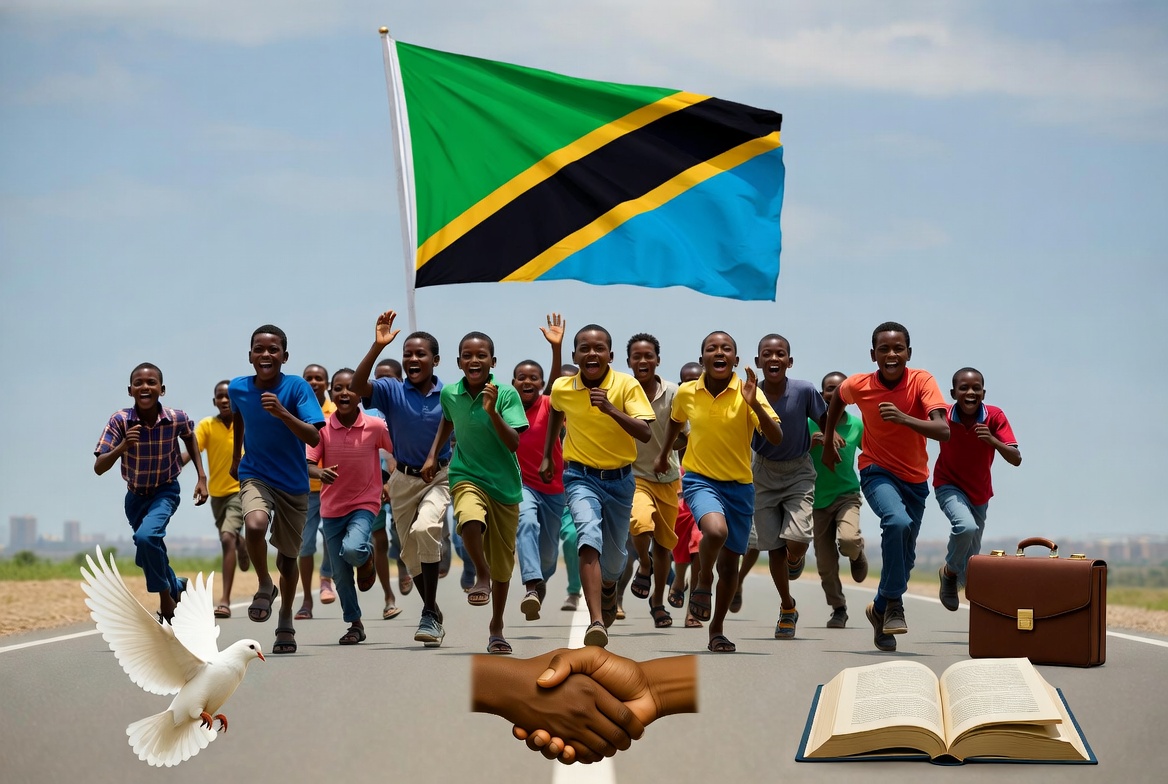
Tanzania has been a shining example of peace and stability in the East African region for many decades. However, in this era of political, economic, and social conflicts around the world, the importance of maintaining peace and reconciliation cannot be overstated. Peace is not merely the absence of war, but a state of cooperation, wisdom, and harmony among people of different religions, social classes, races, and ideologies. Reconciliation, on the other hand, involves mediation, forgiveness, and reuniting after conflicts so that the nation can move forward without obstacles.
Peace and reconciliation are vital for Tanzania because they create a conducive environment for economic development by giving investors the confidence to come and invest. They also strengthen national unity and prevent hatred from turning into violence. Furthermore, they ensure justice and equality for every citizen, thereby reducing poverty and providing equal opportunities in education, health, and employment. Ultimately, peace is a strong foundation for a better future for generations to come.
To capture the real views of citizens, we spoke with three residents of Dar es Salaam from different areas.
Mr. Juma Hassan, a 48-year-old businessman from Kariakoo, said: “To me, peace means I can open my shop in the morning without fear of violence or theft. I remember during the 2020 elections, there was some tension and people were divided, but when reconciliation came, business returned and even improved. Without peace, even foreign investors will not come. We need our leaders to continue teaching us about unity and to stop the youth from listening to hatred on social media.”
Ms. Aisha Mohammed, a 32-year-old primary school teacher from Temeke, explained: “I see the importance of peace every day at school. Our children come from Christian, Muslim, and Hindu families. We teach them to respect one another from the first grade. Reconciliation is greatly needed after family or political conflicts. I always tell parents that ‘peace is medicine’. During COVID-19, we worked together without considering our differences and supported each other. If peace is broken, children’s education will be affected and poverty will increase. The government should invest more in reconciliation programs in our communities.”
Mr. Ramadhani Kikoti, a 55-year-old daladala driver from Kinondoni, said: “Peace means I can drive my vehicle at night without fear of demonstrations or roads being closed. We once had a small political problem and vehicles were burned; it took several days before calm returned. Today, I thank God that we are together. Reconciliation requires a heart of forgiveness and not revenge. I tell my passengers every day: ‘We are brothers and sisters, let us live together.’ The government and religious leaders have a great responsibility to unite the youth and give them jobs so they do not follow people who want chaos.”
These voices of ordinary citizens clearly show that peace and reconciliation are not the responsibility of the government alone, but the duty of every Tanzanian. Tanzania has a rich history of peace since the era of Mwalimu Julius Kambarage Nyerere, and it is our duty to protect and nurture it. Through sincere dialogue, education, and justice, we can build a strong and prosperous nation with sustainable development. As Mr. Juma Hassan said, peace is business, it is education, and it is life itself.
All Tanzanians, let us join hands to sustain our peace. Peace is freedom!
Related Stories
Diplomacy
Tanzania Should Not Close the Doors to Development: Partnership with Russia Is an Opportunity, Not an Obstacle
Kijeba Admin
•
Diplomacy
TANZANIA:EAST AFRICA’S ISLAND OF PEACE
Ali Kapongo
•
Diplomacy
NATIONAL UNITY: PRESIDENT SAMIA BUILDS A TANZANIA FOR ALL AND SHARED PROSPERITY
Ali Kapongo
•